

The Best Way to Feed Your Dog: A Quick Dog Feeding Guide by G&G Pets
When getting a dog for the first time, people often think feeding will be the easiest part. Surprise! Some dogs have allergies, specific feeding routines, supplements, or medications they need. In this article, we’ll cover the basic guidelines for a feeding schedule, what common human foods to avoid, and more.
Guidelines for a Healthy Dog Feeding Schedule
For a healthy feeding schedule, routine and consistency are more important than the exact time, so choose mealtimes that are easy for you to stick to every day and that makes sense for your dog’s daily routine, age and fitness level It’s often recommended to leave the food bowl out for 10-20 minutes, and then remove it — even if they haven’t finished everything. This helps reinforce the schedule for your dog and can reduce begging throughout the day.
Keep their exercise schedule in mind as well. A short walk before dinner can be nice, but running around afterward on a full stomach could lead to increased vomiting.
Is it better to feed a dog once or twice a day?
Most veterinarians will recommend two meals a day, spaced 10-12 hours apart for healthy adult dogs. For example, they may get breakfast at 8am and dinner at 6pm. However,
Puppies and older, sundowning dogs often need more frequent meals
Over- or underweight dogs may need a different feeding schedule
Dogs that eat too quickly may need more frequent and smaller meals, as well as special feeding bowls called slow feeders
Ask your vet if they recommend anything other than the standard 2 meals per day.

How much water does a dog need?
Water is another key aspect of a dog’s healthy feeding schedule. Unlike food, they should have access to clean, fresh still water at all times (no sparkling water!).
Adult dogs should drink at least one ounce of water for every pound they weigh every day. However, puppies, dogs in warmer climates, athletic dogs, and larger dogs will likely need to drink more.
Refresh and clean your dog’s bowl daily so you can monitor how much they’re drinking. Let your vet know immediately if you notice them stop or slow down drastically.
What's the Best Food for My Dog? And How Much Should a Dog Eat in a Day?
There are a ton of variables to keep in mind when answering these questions, and only a veterinarian can give you an accurate answer. Your dog will likely need different types and different amounts of food throughout their life.
Talk to your vet about what they recommend for your dog’s current life stage. And they’ll also have a lot of questions for you, so make sure you’re ready to discuss your dog’s:
Age | Puppies, adults, and senior dogs all have different caloric and nutritional needs. Puppies are still growing, and senior dogs may need specialised foods.
Overall Health | Some health conditions may require a specialized feeding schedule and food. For example, diabetic dogs may need a specific diet and their meals at exact times.
Current Weight | Under- or overweight dogs will likely need a temporary feeding schedule and amount that may need to scale over time.
Activity Level | Dogs with more active lifestyles will burn more calories throughout the day and need more food that supports that training schedule than less active dogs.
Food Type | If you already have a food in mind (or they already have an established diet when you adopt them), bring in the full nutritional label if you can so they can evaluate its makeup and caloric value.
Treats | Treats should typically make up no more than 15% of your dog’s daily calories, as they usually don’t have much nutritional value. Always read the labels and stick with treats that have minimal ingredients, salt- and seasoning-free, with no fillers.
In general, when choosing a dog food, read the labels carefully. Most dogs do best on a low- or grain-free diet (except for rice) and one that opts for higher quality meat rather than low-quality fillers. If you have the budget, European-produced dry dog foods are held to higher quality standards than most American products.
The farmers market is also a great place to look for dog food vendors.
What Foods Are Toxic to Dogs?
Many foods that are common to have in your home are poisonous for dogs and should be handled with caution if you do have them in your home. They should never be a part of any “table scraps” or treats.
Alcohol | Can cause respiratory issues and vomiting.
Alliums | All plants in the allium family, like onions, garlic, and shallots, are toxic.
Avocados | Contain chemicals that cause vomiting and diarrhea.
Caffeinated Drinks | Caffeine is a neurotoxin for dogs and could cause seizures.
Chocolate | All types of cocoa contain theobromine and caffeine, dog neurotoxins.
Dairy | Dogs are essentially lactose intolerant. Small tastes are ok, but large doses can lead to gastrointestinal distress.
Foraged Food | Many types of wild mushrooms, berries, or plants may be toxic.
Grapes and Raisins | Extremely toxic; even a few of them can cause kidney failure.
Green Tomatoes | Contain solanine in the green fruit and leaves, a toxic substance.
Macadamia Nuts | Extremely poisonous; even a few of them could be fatal for dogs.
Raw Eggs and Meat | Could contain harmful bacteria or parasites.
Rhubarb | Contains soluble oxalate crystals that can cause kidney failure.
Salt | In human-level quantities, salt can cause vomiting and diarrhea in dogs.
Star Fruit | Contains soluble calcium oxalate, which could be harmful in high doses.
Xylitol | This common sugar-free sweetener can be found in gum, candy, some peanut butters, flavored water, and more. Causes severe illness and death.
It’s also important to remember that dogs can have food allergies just like we can. If you notice allergy symptoms like itching or swelling after your dog eats (dog food or human food), talk to your vet.
Is "Human Food" Really Bad for Dogs?
It can be. Especially processed or highly seasoned foods. In addition to some common human foods and spices being poisonous to dogs as we’ve discussed, many of them are too high in fat or sugars to be healthy for dogs.
Some vegetables can be ok to add in small quantities. Many dogs enjoy crunchy ones like carrots, sweet potatoes, or bell peppers as regular healthy treats.
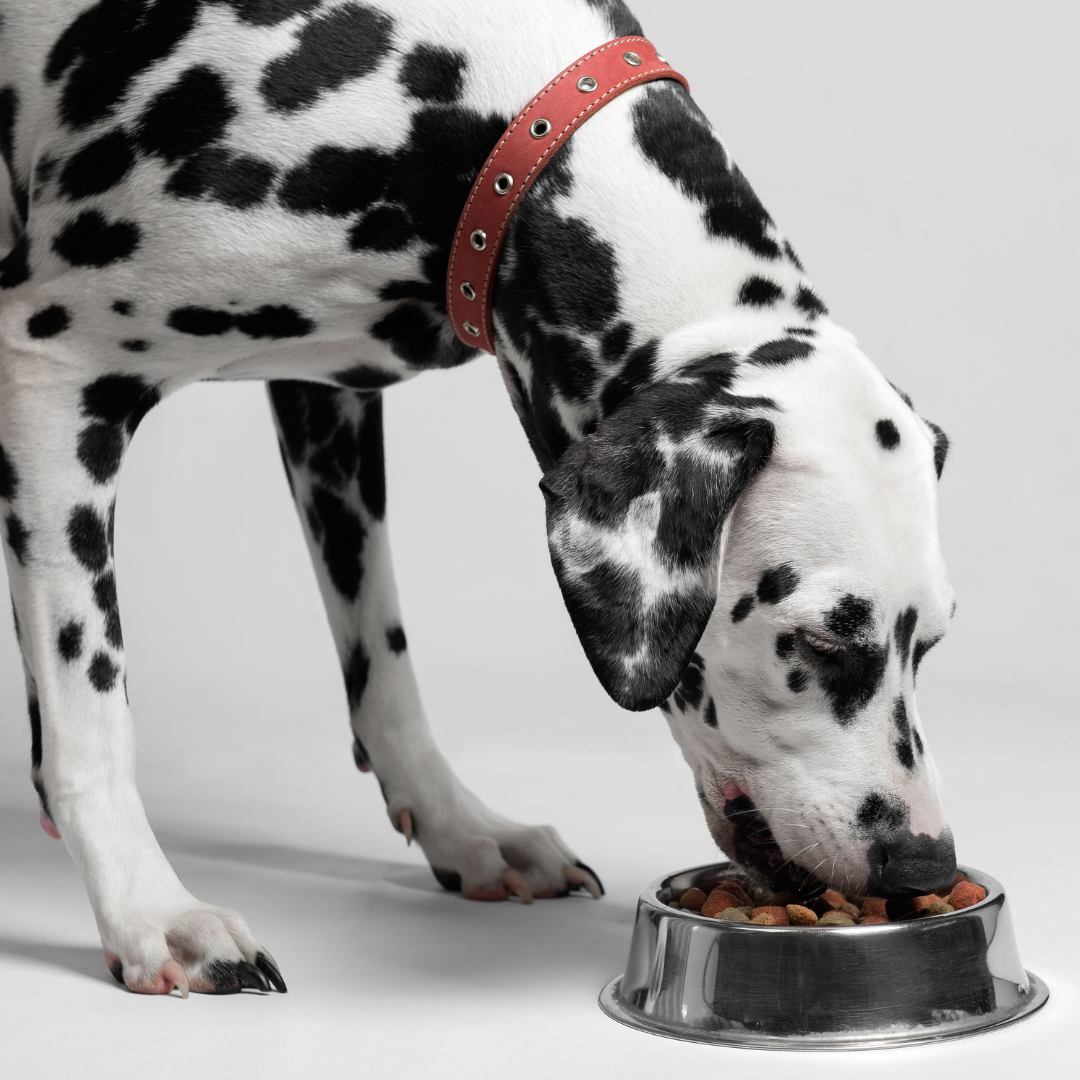
What is the healthiest way to feed your dog?
Your dog’s food and water bowls don't need to be overly complicated. Just easy to keep clean, an appropriate size, and at a height that doesn’t strain your dog’s neck.
Some great options include:
How to Feed Your Dog While You're on Vacation
If you’re going to be away from the house for an extended period of time, most experts don’t recommend using an automatic feeder. They’re too prone to failure and risk endangering your dog if used unsupervised.
Using a boarding facility can work for some dogs that enjoy making new friends and don’t require a specialised feeding schedule. But if your dog needs to be fed more than twice a day, requires refrigerated food, or needs medication — a boarding facility may not be able to fulfill their needs.
Professional, in-home pet sitting is the best way to make sure your dog gets to stay in an environment that’s comfortable for them, and gets fed exactly on the schedule they’re used to. In-home pet sitters understand the needs of dogs with special diets and will be able to prepare their food in a sanitary way with individual attention — just like you do.
And using a local pet sitting agency that knows your neighborhood is the best way to find one of those pet sitters. If you’re in the San Francisco Bay Area, we’d love to get to know you at G&G Pets. Our sitters are experienced in working with dogs with specialized diets, mobility issues, separation anxiety, and other needs that can make using boarding facilities hard. You can learn more about our services here or use the button below to view the currently available sitters and apply to meet one.

The information provided by Grand & Graham Pets (G&G Pets) on https://www.grandgrahampets.com is for general informational purposes only. It does not represent medical or training pet care advice. All information on the blog is provided in good faith; however, we make no representation or warranty of any kind, express or implied, regarding the accuracy, adequacy, validity, reliability, or completeness of any information on the blog. Under no circumstances shall we have any liability to you for any loss or damage of any kind incurred as a result of the use of the blog or reliance on any information provided on the blog. Your use of the blog and your reliance on any information on the blog is undertaken solely at your own risk. All text content of this blog is the property of Grand & Graham Pets and is therefore subject to copyright protection and not for reproduction or reuse. By accessing or using the website, blog, any materials, content, or intellectual property owned by the Owner, you acknowledge and agree to the terms of this Disclaimer. For more information, please see our full Disclaimer.
